


Waterproof Sealing for Small Home Appliances
Continuous silicone gasket sealing for small home appliance housings — achieving IP44–IP67 waterproof ratings for kettles, blenders, shavers and other wet-use consumer devices.
Precision Gasket Sealing for Wet-Use Small Appliance Housings
Small home appliances used in or near water — electric kettles, hand blenders, milk frothers, electric shavers, hair clippers and countertop cleaning devices — depend on a precisely dispensed silicone gasket bead to achieve their rated waterproof protection while allowing the housing to be assembled from separately molded plastic halves. Unlike large appliance sealing, small appliance housings often feature compact, curved and ergonomically shaped profiles that make the sealing groove path considerably more intricate than the straight or simple-curve seals found on larger enclosures.
The dispensing challenge is maintaining constant bead cross-section around tight radius corners and complex curved profiles unique to ergonomic small appliance housing designs, since any dimensional inconsistency in the bead creates a weak point where compression during assembly fails to achieve full gasket contact — directly compromising the finished product's IP rating. Bead height consistency must also be tightly controlled, since small appliance housings typically use lower assembly compression force than larger enclosures, leaving less margin to compensate for bead variation.
SANCO servo-controlled dispensing systems and desktop visual dispensing machines deliver the continuous path bead control and CCD vision alignment required to seal the intricate, curved housing geometries characteristic of small home appliance products across the full range of waterproof rating requirements.
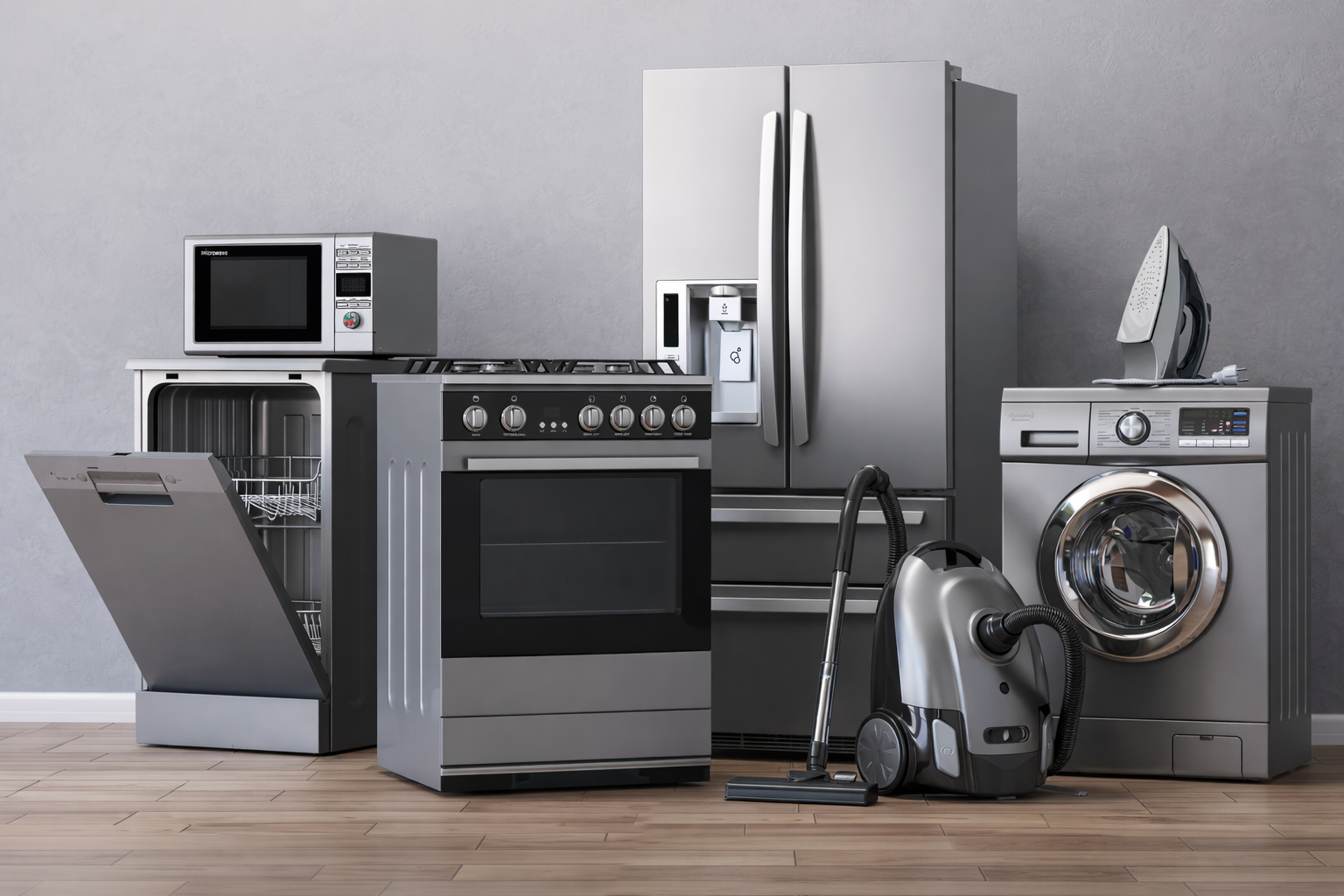
Why Small Appliance Sealing Demands Precision Around Complex Geometry
Ergonomic small appliance housings introduce curved, intricate sealing groove profiles that are considerably more demanding than the simpler geometries found on larger appliance enclosures.
Complex Curved Housing Groove Profiles
Small appliances are frequently designed with ergonomic, curved housing shapes for handheld comfort, producing sealing grooves with tight radius corners and continuously varying curvature that the dispensing path must follow precisely without bead cross-section variation.
Low Assembly Compression Force Tolerance
Small appliance housings typically use lower clamping or snap-fit assembly force than larger enclosures, leaving less margin to compensate for bead height inconsistency — making bead height uniformity within ±0.05 mm essential for reliable sealing.
Void-Free Continuous Bead Around Tight Corners
A single void or thin section in the sealing bead, particularly at tight-radius corners where dispensing speed changes are greatest, creates a leak path that compromises the entire housing's water ingress protection.
Multiple Housing Penetrations to Seal
Small appliances often have multiple penetrations requiring seals — power cord entry, button/switch membranes, battery compartment doors — each requiring a different sealing bead geometry within the same product assembly cycle.
Wide IP Rating Range Requirements
Product lines span from splash-resistant IP44 devices to fully immersible IP67 devices, requiring the same dispensing platform to support materially different bead specifications and material selections across different SKUs.
High-Volume Consumer Product Cycle Time
Small appliances are high-volume consumer products requiring dispensing cycle times compatible with cost-competitive mass production, without sacrificing the sealing precision waterproof rating certification demands.
Key Capabilities for Small Appliance Waterproof Sealing
Continuous Path Bead Control on Curved Profiles
Servo-controlled dispensing path maintains constant bead cross-section around tight corners and continuously curved profiles typical of ergonomic appliance housings.
CCD Vision ±0.05 mm Alignment
Optical positioning compensates for housing fixture variation and part-to-part tolerance, keeping the sealant bead centred in the sealing groove on every cycle.
Bead Height Consistency for Low-Compression Assembly
Precise volumetric control maintains bead height within tight tolerance, critical for housings assembled with lower clamping force than larger enclosures.
Multi-Position Sequential Dispensing
Single programme sequences all housing seal, cord entry and button membrane sealing positions in one automated pass per product.
Wide IP Rating Material Flexibility
Interchangeable valve configurations support RTV silicone, UV silicone and other sealant chemistries spanning IP44 through IP67 rating requirements.
High-Speed Small-Part Dispensing
Fast axis speed and rapid programme changeover suit the high-volume, mixed-SKU production environments typical of small appliance manufacturing.
Offline Path Programming from Housing CAD
Import housing CAD data to auto-generate dispensing toolpaths for complex ergonomic groove profiles without manual path teaching.
Inline Small Appliance Assembly Integration
SMEMA conveyor integration links SANCO sealing machines directly into small appliance assembly lines between housing molding and final leak-test stations.
The Small Appliance Waterproof Sealing Process Step by Step
Small appliance sealing requires precise path control around complex curved geometry and consistent bead height for reliable low-compression assembly. SANCO equipment is calibrated for every stage.
Housing Load & Vision Alignment
Appliance housing half is loaded and CCD vision captures groove fiducials to calculate exact path offset.
Continuous Bead Dispensing
SANCO machine traces the full sealing groove with a continuous silicone bead, maintaining constant cross-section through corners and curves.
Housing Assembly & Compression
Housing halves are mated under controlled force, compressing the gasket to target height.
Cure
Moisture or UV cure sets the compressed gasket seal.
IP Rating & Leak Testing
Sample units undergo water immersion or spray testing to verify the finished housing meets target IP specification.
Small Appliance Sealing Material Types & SANCO Compatibility
SANCO dispensing machines handle the sealing material types used across small home appliance waterproof housing assembly.
| Material Type | Viscosity Range | Cure Method | Typical Application | SANCO Compatibility |
|---|---|---|---|---|
| RTV Silicone Sealant | 20,000 – 200,000 mPa·s | Moisture cure 24–48 h | General housing seam sealing for IP44–IP65 rated small appliances | Recommended |
| UV-Cure Silicone | 5,000 – 80,000 mPa·s | UV 365 nm, 5–30 s | Fast-cure seal for high-volume small appliance production lines | Recommended |
| FIPG (Formed-in-Place Gasket) | 50,000 – 300,000 mPa·s | Moisture cure | OEM-grade housing interface gasket for IP67-rated immersible small appliances | Recommended |
| Cord Entry Grommet Sealant | 30,000 – 150,000 mPa·s | Moisture or UV cure | Targeted sealing around power cord entry points to prevent water tracking along the cord | Recommended |
| Button/Membrane Bonding Adhesive | 5,000 – 40,000 mPa·s | UV or moisture cure | Waterproof bonding for silicone button membranes and switch seals | Recommended |
Frequently Asked Questions
How does SANCO handle the curved, ergonomic groove profiles common in small appliances?
Servo-controlled continuous path dispensing follows complex curved profiles imported from housing CAD data, maintaining constant bead cross-section through tight-radius corners and continuously varying curvature typical of ergonomic small appliance designs. Contact our application engineers to review path programming for your housing geometry.
What IP ratings can small appliances sealed with SANCO equipment achieve?
Achievable IP rating depends on material selection and housing design, but SANCO's precise continuous bead control supports small appliance products rated from splash-resistant IP44 through fully immersible IP67 when paired with an appropriate sealant formulation.
Can SANCO equipment seal multiple penetration points in one production cycle?
Yes. Single programme sequences housing seam sealing, cord entry sealing and button membrane bonding operations in one automated pass, without manual repositioning between different sealing locations on the same product.
How does SANCO maintain bead height consistency for lower-compression housing assembly?
Precise volumetric dosing control maintains bead height within ±0.05 mm tolerance across the full sealing perimeter, critical for small appliance housings that typically use lower clamping or snap-fit assembly force than larger enclosures.
What cycle time can SANCO achieve for small appliance sealing on high-volume lines?
Cycle time depends on groove perimeter length and material type. SANCO high-speed dispensing platforms are configured to match the cost-competitive cycle time requirements typical of high-volume consumer small appliance production.
Where can I learn about other home appliance dispensing applications?
Visit our Applications section for guides covering protective coating for PCBs, connector potting and protection for refrigerator control boards. For equipment specifications, see our dispensing machine product pages.